Old Ones
Stranger in a Strange LandThe Old Ones are the discorporate elders of Mars: beings beyond bodily form who act as guardians, teachers, and authorities for the Martians. They send Valentine Michael Smith from Mars to learn about Earth, and their influence defines his early understanding of knowledge, death, growth, and right action. Yet the novel’s final view is not simply reverent. The Old Ones are powerful and patient, but not omniscient; their judgments may ultimately place humanity in danger.
Identity and place in Martian life
The Old Ones occupy the last of the five major shapes through which Smith understands Martian life: egg, nymph, nestling, adult, and Old One, which has no shape. The essence of an Old One is already patterned in the egg, but becoming one marks a passage beyond embodied existence. Smith knows the distinction between shape and essence before he can fully explain it: shape alone does not determine what a being is, and understanding requires going beyond appearance to what can be grokked.
To Smith, the Old Ones are not merely revered ancestors. They are the source of learnings that encompass what human beings would separate into philosophy and science, as well as practical questions. Because he has never encountered doubt or research as distinct ideas, he assumes that an answer can be obtained from the Old Ones and that their knowledge is infallible within his experience. His assumptions even lead him to mistake human institutions of information: he supposes that a weather forecast and the Encyclopaedia Britannica are communications from human Old Ones, passed along for the benefit of those who remain embodied.
Guardians, teachers, and authority
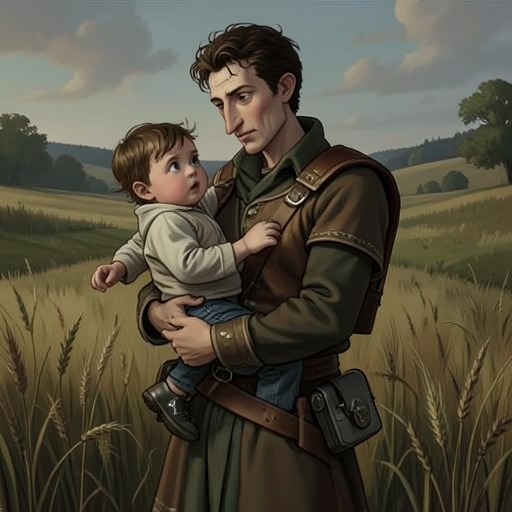
The Old Ones’ relationship with Smith is one of care as well as instruction. When he first tries to understand the others who have become his own nestlings, the experience of his arrival on Earth overwhelms him. His thoughts retreat past that painful arrival, past his first recognition that he differs from his nestling brothers, and back toward the nest itself. The movement shows how powerfully his foundational sense of belonging and safety is tied to the environment in which the Old Ones raised him.
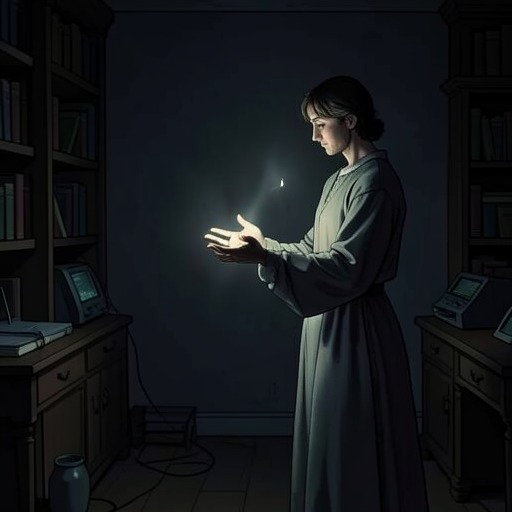
Their oversight also accompanies Smith’s early experience of leaving his body. Before he attempts this alone, an Old One has been present on each occasion to watch over his body, guard against disorientation, and remain with him until he returns and starts it again. Smith’s later solo attempt therefore marks a change in his independence: he is acting without the supervision that had made the unfamiliar experience safe.
The Old Ones are also treated as the highest source of authority in Smith’s moral and practical development. When he sees a weapon aimed at Jill and recognizes the situation as a critical cusp, he acts rather than remaining in passive waiting. His understanding of a cusp as a point at which contemplation must produce right action has been formed within the Martian framework in which the Old Ones guide his growth. His deference remains visible later, when he hesitates to make arrangements himself because he is still, in his own estimation, only an egg and must wait for Jubal to arrange a meeting with human authorities.
Learning, art, and the limits of knowledge
The Old Ones’ intellectual life is not presented as a simple storehouse of answers. They sustain long discussions through rapport about difficult aesthetic questions, including how to judge a work that crosses from embodied to discorporate existence. A Martian artist had been composing a work that could equally be understood as poetry, music, or philosophy, a sequence of emotions arranged in tragic logical necessity. After the artist accidentally discorporated, an Old One shaped the work’s final form, while the artist continued working as though still embodied and apparently did not notice the change in status. The Old Ones debated whether the result constituted a new art form and whether other works might be produced through artists’ unexpected discorporation. The episode presents them as speculative and absorbed in questions of form, but also as participants in a world where the boundary between creator and work can shift beyond human categories.
Their learning is not equally accessible to every stage of life. Smith tells Jubal that he cannot yet know as an Old One knows: he must see, while an Old One can know, grok, and act without eyes. He apologizes for the gap. In this contrast, maturity is not simply the accumulation of information; it is a different mode of apprehension and action. The Old Ones’ apparent certainty is therefore bound to a developmental difference that Smith recognizes but has not yet reached.
The novel also complicates any assumption that the Old Ones’ insights are universal. In one discussion, they treat the approaching appearance of a distant nova on Mars as a future lesson for the young, while continuing their sustained debate over an epic concerning the death of the Fifth Planet. Their attention ranges across immense timescales, but the narrated perspective makes clear that their concerns remain situated in Martian life and culture.
Encounters with humanity
Smith’s hope of meeting human Old Ones grows out of his Martian expectations. He is greatly excited when he understands a Fosterite service to announce the impending discorporation of two people, whom he thinks may be about to join the human Old Ones. He wonders whether this will let him ask the questions he has been waiting to ask, or whether he needs further learning from his water brothers first. Jubal explains that human religions make differing claims to contact with Old Ones, but that their answers are not the same. For Smith, the exchange exposes a gap between his confidence in a single, reliable authority and the competing human accounts offered in its place.
That gap also shapes his questions about death. Speaking with Jill, Smith wonders whether humans have any Old Ones at all, and whether their dead continue to exist or vanish into nothing. On Mars, he had been able to consult the elders about anything and receive an answer he trusted; without a comparable authority, human death appears to him as a frightening uncertainty. His concern is not just theological. It challenges the structure of knowledge on which his upbringing has depended.
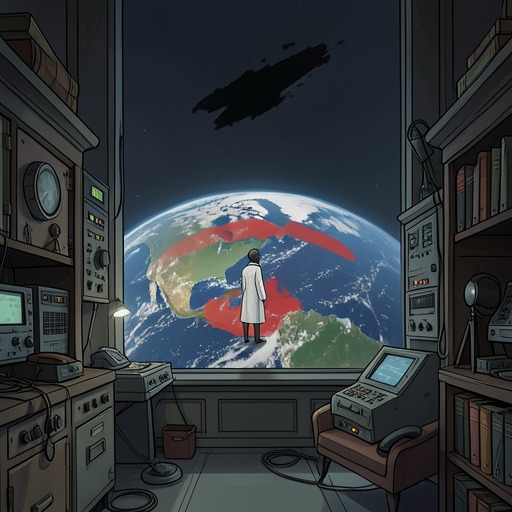
During the Earth–Mars diplomatic meeting, Jubal presents Smith as the representative through whom the Ancient Ones of Mars are visiting Earth. In that account, honors shown to Smith are honors shown to the elders, and harm done to him would also be harm done to them. The symbolic connection becomes a political argument: the Martian elders are listening to how Earth treats their representative. Jubal distinguishes this warning from a legal claim under the Larkin Decision, emphasizing instead the prudence of honoring a neighbor whose rulers will notice the treatment of their ambassador.
Judgment and narrative significance
The novel’s final assessment overturns the assumption that the Old Ones are all-knowing. They are not omniscient; they are provincial in their own way, as humans are. Even with superior logic, they interpret the restless, quarrelsome people of Earth through their own local values. In that process, they may come to recognize an incurable wrongness in humanity and conclude that it must be weeded out.
Their deliberation is expected to be slow, and the danger is not portrayed as immediate: by the time the Old Ones reach a decision, destroying humanity may be highly improbable. Yet the scale of their patience does not make their judgment harmless. Their immense timescale can leave human history exposed to an eventual verdict made by beings who are powerful but limited in perspective. That ending recasts the Old Ones’ central significance. They begin as Smith’s trusted guardians and the source of an apparently complete understanding of the world; they end as another civilization’s authorities, capable of care and profound thought but not exempt from the partial values that make judgment dangerous.